

Satellite channels are an important part of modern television viewing, offering audiences access to news, entertainment, sports, documentaries, movies, and many other types of programming.
As satellite networks continue to develop, channel parameters may change from time to time. A frequency that worked previously may be replaced, modified, or transferred to another broadcasting configuration.
These changes can leave viewers wondering why a familiar channel has disappeared from their receiver or why its signal has become weaker. In many cases, updating the receiver with the latest available information can solve the problem.
This article provides a practical overview of the channel discussed here, along with useful reception information and simple instructions for configuring your receiver. Each step is presented clearly so it can be followed without advanced technical knowledge.
By following the information provided in this guide, viewers can make the channel-search process more organized and avoid many of the common difficulties associated with manual satellite tuning.
Satellites are among the most important technologies in modern communication and airing. They play a major role in transmitting tv and radio channels, as well as providing internet and communication services across vast geographical areas. With continuous technological development, many satellites have been launched to serve different regions of the world.
Some of these satellites are Arab and mainly cover the Middle East and North Africa, while others are international and provide worldwide range. This article presents an overview of the most famous Arab and foreign satellites and their key features.
First: Arab Satellites
Nilesat
Nilesat is one of the most widely used satellites in the Arab world. It covers the Middle East and North Africa region and broadcasts a large number of Arabic channels, including news, amusement, sports, and religious content. It is known for its strong presence in Arab households and its ease of reception.
Key Features:
- Wide range across the Arab region
- Large number of free-to-air channels
- Easy configuration and reception with relatively small satellite dishes
Arabsat
Arabsat is one of the oldest and most important Arab satellite systems. It provides tv airing, radio services, and communication solutions across the Middle East, Africa, and parts of Europe. It plays a major role in connecting Arab audiences with both local and international content.
Key Features:
- Mix of Arabic and international channels
- Reliable and steady transmit clarity
- Used for both tv and communication services
Es’hailSat
Es’hailSat is a modern satellite system from Qatar that has gained increasing popularity in recent years. It is especially known for airing high-clarity sports and amusement channels.
Key Features:
- Excellent HD and 4K airing clarity
- Strong and steady transmission performance
- Premium sports and amusement content
Badr Satellites
The Badr satellite series is part of the Arab satellite system and is widely used for airing in the Arab region. It is particularly popular in the Gulf countries and North Africa.
Key Features:
- Supports a large number of channels
- Strong range in the Gulf region and North Africa
- Stable transmission reception
Second: International Satellites
Hot Bird
Hot Bird is one of the most famous European satellite systems. It broadcasts a large variety of international channels in multiple languages and is widely used across Europe and neighboring regions.
Key Features:
- Wide variety of multilingual channels
- Includes news, amusement, and cultural content from around the world
- Popular among viewers interested in European tv
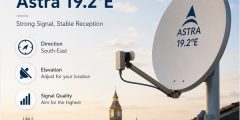
Astra
Astra is one of the strongest satellite systems in Europe and is widely used for digital airing. It is known for its high-clarity transmission and large number of channels.
Key Features:
- Very high transmit clarity
- Extensive range of European channels
- Strong support for digital tv services
Eutelsat
Eutelsat operates a large group of satellites that provide airing and communication services across different parts of the world. It is one of the leading satellite operators globally.
Key Features:
- Wide worldwide range
- Offers tv, internet, and communication services
- Advanced satellite technology
Intelsat
Intelsat is one of the oldest and largest satellite networks in the world. It provides a wide range of services, including tv airing and international communications.
Key Features:
- Global range across multiple continents
- Widely used in professional airing
- Advanced and reliable communication infrastructure
Differences Between Arab and International Satellites
Arab satellites such as Nilesat and Arabsat are mainly focused on Arabic-language content and are best suited for viewers in the Middle East and North Africa. They are generally easier to receive in this region and require smaller satellite dishes.
In contrast, international satellites such as Hot Bird and Astra offer a much wider variety of worldwide content in different languages. However, they may require more precise positioning and sometimes larger dishes depending on location.
Common Reasons for Slow Satellite Channel Scanning
- Scanning multiple satellites or a large number of transponders can significantly increase search time.
- Weak or unstable signals may cause the receiver to spend more time processing transponder data.
- Incorrect LNB settings or outdated transponder lists can make the scanning process less efficient.
- Using a targeted transponder scan can often reduce search time compared with a full satellite scan.